
Latest Thinking· Article
Agriculture: Can it still be the backbone of the African economy?
A look into the future
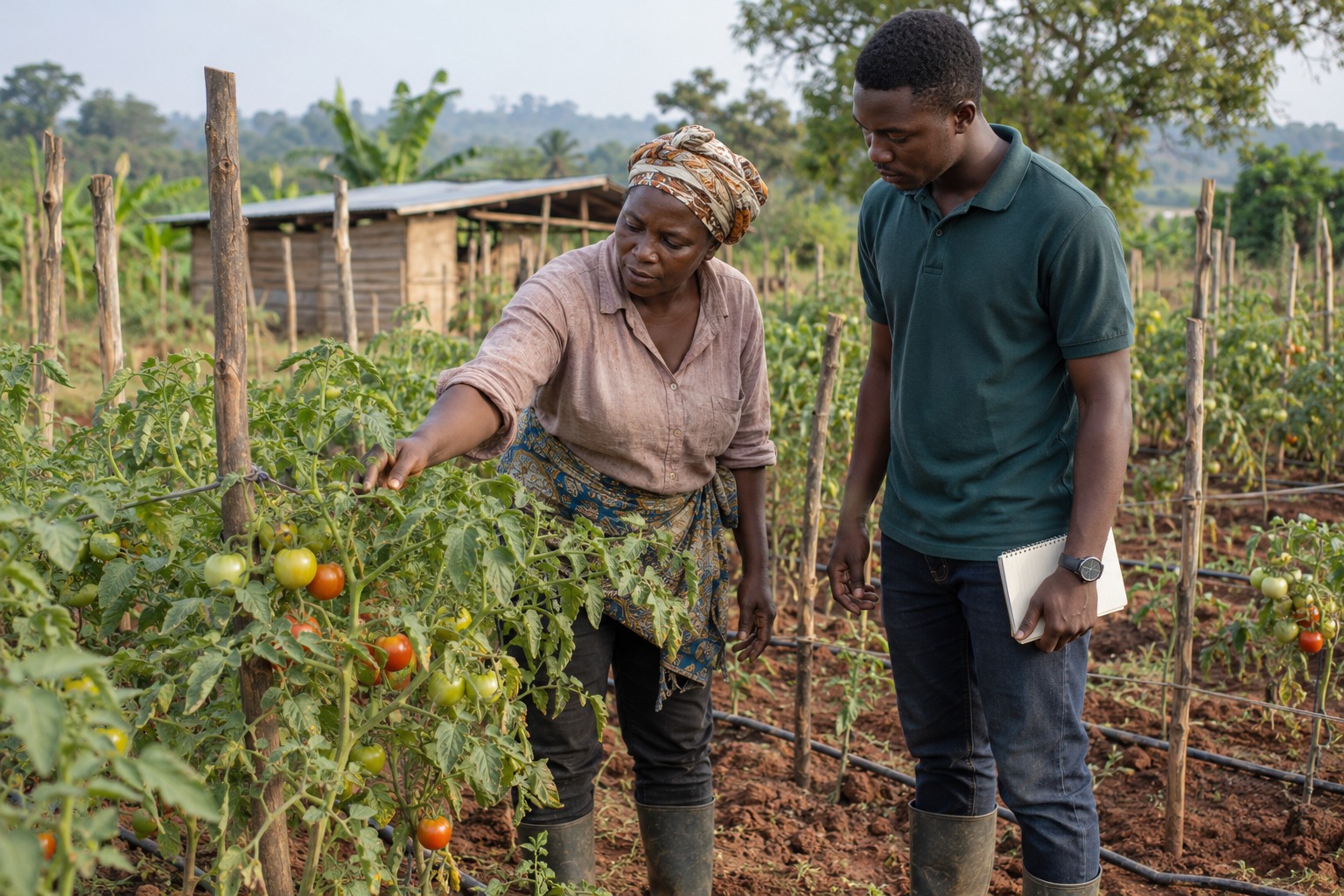
Productive agriculture combines practical experience with knowledge and dependable services.
Agriculture can remain one of the foundations of African prosperity. Its future strength will depend on how well it feeds people, raises incomes and supports the industries around it. That requires productive farms connected to reliable markets, with more opportunities to earn a decent living throughout the food system.
Follow a tomato from a field to a family kitchen. Along the way, someone supplies seedlings, maintains irrigation, provides a crate, arranges transport, checks quality and sells the produce. Others may turn it into a packaged food. Each stage requires knowledge, equipment and organisation. Each can create work and retain value within an African economy.
This wider view matters when we ask what agriculture could become over the next decade. It also changes the possibilities that students and young entrepreneurs should consider.
What being the backbone should mean
Agriculture supplies food and raw materials, supports livelihoods and connects rural communities with urban markets. The broader agrifood system includes food processing, transport, storage, distribution and related services. Its economic contribution extends well beyond what happens on a farm.
FAO's June 2026 employment update describes agrifood systems as a major source of livelihoods, especially in Africa. It also finds that African agrifood employment remains concentrated in agriculture, while off-farm activities account for more of that employment in several other world regions. 1
The development question is how to make this work more productive and better rewarded. A high number of people working in agriculture can coexist with low earnings. More output, useful infrastructure and stronger connections to industry can help change that relationship.
Agriculture's share of gross domestic product, or GDP, may fall as manufacturing and services grow faster, even while agricultural output and incomes rise. That can be part of successful economic development. The meaningful tests are whether households can afford nutritious food, farmers can earn sustainable incomes and the wider economy gains productive businesses.
African economies also differ considerably. Water availability, crop suitability, land arrangements and market access vary between countries and within them. A strategy that works for a vegetable grower near Accra may have little relevance to a pastoral household in the Sahel. The next decade will require locally informed choices.
The next decade could bring growth and continued dependence
The OECD–FAO Agricultural Outlook 2026–2035 projects agricultural expansion in sub-Saharan Africa alongside rising net imports of basic food commodities. Its assessment points to growing demand and constraints on production and market access. These are projections under stated assumptions, rather than a fixed outcome for every country. 2
The implication is important: producing more food does not automatically mean that domestic supply will keep pace with demand. Population growth, purchasing power and the types of food people buy all affect the balance. A larger market creates possibilities for African producers, processors and distributors, but they must be able to supply it competitively.
Imports can help households access food that cannot be produced locally at a reasonable cost, and can cushion local shortages. The practical task is to strengthen competitive domestic production and regional supply while managing the risks of dependence on unreliable sources.
For a business, the starting point is a specific market. Who buys this product? In what quantity and condition? At what price, and when do they pay? The fact that everybody needs food is not enough to establish a profitable enterprise.
Five changes that could shape agriculture by 2036
More value will need to come from each harvest
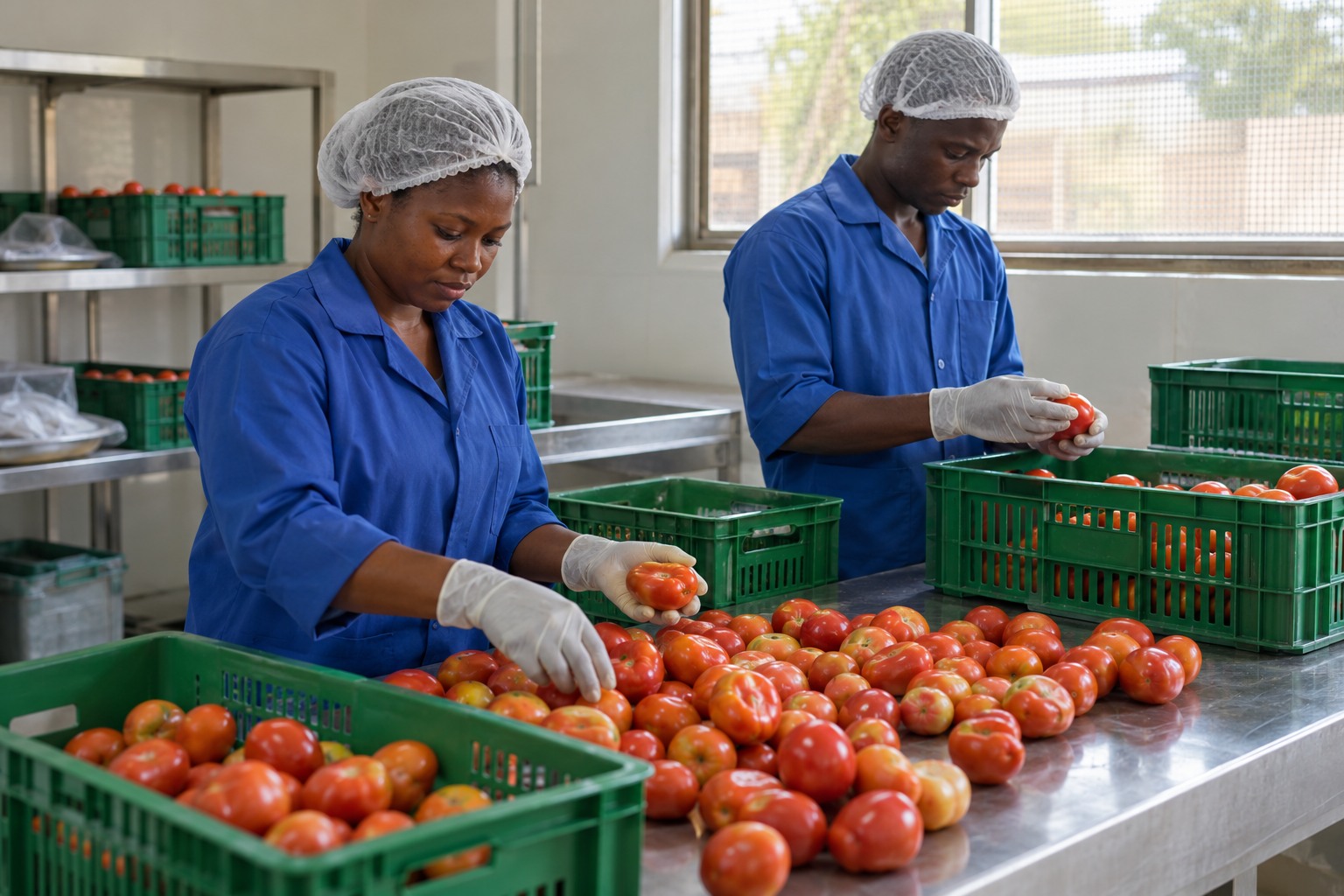
Increasing production is useful when produce can reach a buyer in a saleable condition. Appropriate storage, careful handling and dependable transport can make the difference between a valuable harvest and a loss.
For Ghana, possible areas to investigate include better vegetable distribution, grain drying and storage, cassava processing and reliable supply for food businesses. Their viability depends on the product and location. A cold room needs enough paying users to cover electricity, repairs and management. A processing plant needs consistent raw materials, suitable packaging and customers for its output.
This is where agriculture connects with industrial development. Food science, refrigeration, machinery maintenance, packaging and logistics become part of the agricultural opportunity. Investment should strengthen those connections rather than leave a farmer with a bigger harvest and the same unreliable route to market.
Climate adaptation will become part of ordinary business planning
The Intergovernmental Panel on Climate Change has documented adverse effects on African food production and agricultural productivity, with further risks as warming increases. Its Africa assessment also identifies adaptation options and warns that their effectiveness has limits. 3
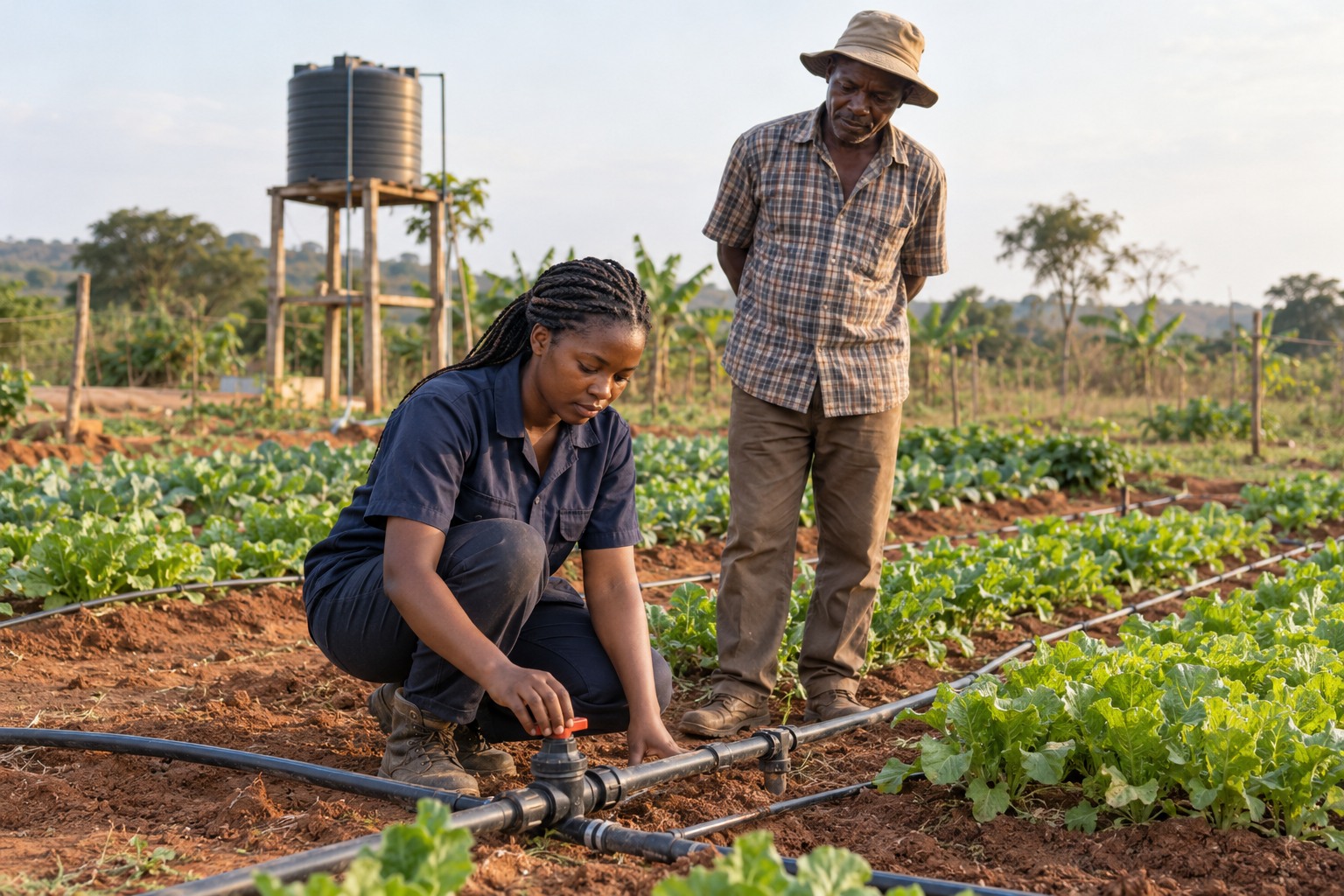
That makes water management, soil health, locally suitable crop varieties and useful weather information central business concerns. Choices need to reflect the place and the farming system. Irrigation can reduce one risk while creating costs and pressure on a limited water supply. A crop promoted as resilient still needs to suit the soil, season and market.
The aim should be sustained production without exhausting the resources it depends on. Clearing more land can carry environmental and social costs; improving output from existing farmland can be a better option where it is feasible. Agricultural advice and investment need to take those trade-offs seriously.
Technology will be judged by whether it solves a problem
Over the next decade, farmers and businesses may have more access to digital records, weather services, remote sensing, improved machinery and AI-assisted advice. Their usefulness will depend on cost, reliability and fit with everyday work.
A shared equipment service might help farmers complete planting on time. A simple stock record might help a distributor identify where losses occur. A sensor might support better irrigation decisions when someone can maintain it and interpret the readings. These are practical possibilities to test, not reasons to buy every new device.
AI-generated crop advice can be wrong, particularly when local conditions or the diagnosis are unclear. Important recommendations should be checked with qualified agricultural professionals and appropriate local evidence. Farmers also need understandable terms governing their data and the services they pay for.
Mechanisation can reduce difficult work and change the labour required for particular tasks. Preparation should include training for equipment operation, maintenance and other roles that develop as production changes. A serious technology strategy considers the people affected as well as the machine purchased.
Regional markets will require dependable systems
Selling food across borders involves much more than finding a buyer. Quality standards, plant and animal health requirements, transport arrangements and predictable border procedures affect whether a product arrives on time and at a competitive price.
The African Union's CAADP Strategy and Action Plan for 2026–2035 gives regional trade and food-system transformation a prominent place. Announced ambitions include increasing agrifood output by 45%, tripling intra-African trade in farm goods and halving post-harvest losses. These are policy targets, not forecasts or completed achievements. 4
The opportunity will depend on implementation. Producers and businesses need consistent rules, workable standards and infrastructure that functions beyond a launch ceremony. A farmer's ability to benefit from a distant market often begins with a passable local road and a buyer who pays as agreed.
Young people will need access to more than encouragement
Telling young people to enter agriculture does little if they cannot access suitable land, practical training, finance or customers. A student may have a good idea and still lack the experience to manage a growing season or negotiate a supply agreement.
Women also need a central place in planning. FAO's 2026 update reports that women accounted for 59% of employment in Africa's non-agricultural agrifood activities in 2023. Their contribution strengthens the case for training, services and business opportunities that respond to their needs. 1
Useful support could include supervised placements, transparent land arrangements, access to shared equipment and help developing credible business records. Smallholders should be able to participate through arrangements they understand, with a fair opportunity to benefit. Scale can come through cooperation and coordinated services as well as through larger individual farms.
Profitability will remain a demanding test
Agriculture involves biological processes, changing weather and uncertain prices. A successful harvest can coincide with a market glut. A promising buyer can delay payment. Feed, fuel or transport costs can rise before a producer receives income.
Anyone assessing an enterprise needs to account for labour, land, water, inputs, losses, equipment wear, transport and finance costs. Revenue alone gives an incomplete picture. It is also necessary to ask how the business would cope with a lower selling price, a disappointing harvest or a longer wait for payment.
For example, an entrepreneur considering a tomato-processing business should investigate the seasonal availability and price of suitable tomatoes, the factory's likely utilisation, food-safety requirements and demand for the final product. Having tomatoes nearby is only one part of that assessment.
Finance can support a viable operation, but repayment schedules need to fit its cash flow. Insurance, where available, also has terms and exclusions that must be understood. Careful trials and reliable records provide a stronger basis for decisions than excitement about the size of the food market.
Agriculture offers several routes for students
An interest in agriculture can lead to work in science, engineering, commerce or public service. Farming itself requires professional competence, and the wider system needs people with complementary skills. The examples below are pathways to explore, not assurances of vacancies or earnings.
| Area of interest | Possible contribution | Useful preparation |
|---|---|---|
| Biology and agricultural science | Crop production, breeding, animal health or extension | Strong science foundations, field experience and relevant professional training |
| Engineering and technical work | Irrigation, refrigeration, machinery or renewable-energy systems | Mathematics, practical technical training and supervised maintenance experience |
| Food science and nutrition | Processing, quality assurance or product development | Chemistry, microbiology and food-safety training |
| Business and finance | Procurement, distribution, enterprise management or agricultural finance | Accounting, costing, market research and operational experience |
| Computing and data | Farm records, forecasting tools or supply-chain systems | Statistics, digital skills and direct understanding of users' needs |
| Design and public policy | Packaging, market communication or rural development | Research, clear communication and knowledge of the relevant sector |
Choose a problem you want to understand, then identify the education and experience needed to contribute. Some roles require recognised degrees or professional registration; others can begin through technical training or an apprenticeship. Check the requirements of the particular field before choosing a course.
Begin with a manageable investigation
A student can learn a great deal without buying land or launching a farm. Choose a local food product and follow its journey through the market. With permission, speak to a producer, a trader and a buyer about their work.
During the first month, map where the product comes from, how it is handled and where difficulties arise. In the second month, investigate one manageable issue, such as record keeping, packaging damage or inconsistent orders. Ask a teacher or practitioner to help you assess what you find.
In the third month, test a small improvement with the people involved and review the result. Keep private business information confidential and avoid interventions that could compromise food safety. A useful outcome may be a better record template or a clearer understanding of why an apparently simple solution would not work.
This approach develops the habits the sector needs: observing carefully, understanding costs, working with people and checking whether an idea is useful. It also gives you concrete experience to discuss when seeking further training or mentorship.
A stronger agricultural economy is a choice to work towards
By 2036, one possible outcome is a more connected food economy: farms with better information and market access, businesses that waste less produce, more capable processors and better opportunities for skilled work. Another is higher demand accompanied by persistent losses, insecure livelihoods and growing pressure on food supplies.
The difference will depend on practical decisions about infrastructure, research, skills and accountable public investment. It will also depend on whether producers and businesses can work within reliable institutions and serve markets competitively. Progress will vary across countries and communities.
Agriculture can continue to support African prosperity while African economies diversify. Its success should be measured through better livelihoods, affordable nutritious food and productive connections with manufacturing and services.
For Future by Design, this is an invitation to look closely at a field that is often discussed too narrowly. Find out how it works. Learn from the people already doing the work. Develop a skill that helps solve a specific problem, and test your assumptions with evidence.
That is a practical way to turn WEKKAN's belief that “we can” into a contribution to Africa's future.
Explore Future by Design for more perspectives on education, enterprise and purposeful preparation.
Sources and further reading
- Food and Agriculture Organization of the United Nations. Employment indicators 2000–2025 June 2026 update. Published 17 June 2026; agrifood employment findings cited here relate to 2023. https://www.fao.org/statistics/highlights-archive/highlights-detail/employment-indicators-2000-2025-%28june-2026-update/
- OECD and FAO. OECD–FAO Agricultural Outlook 2026–2035. Agricultural and food markets trends and prospects. Regional projections should be distinguished from outcomes in individual countries. https://www.oecd.org/en/publications/oecd-fao-agricultural-outlook-2026-2035_47874669-en/full-report/agricultural-and-food-markets-trends-and-prospects_c5cd366b.html
- Intergovernmental Panel on Climate Change. Climate Change 2022 Impacts Adaptation and Vulnerability. Chapter 9 Africa, including sections 9.8.2 and 9.8.3 on food production and adaptation. https://www.ipcc.ch/report/ar6/wg2/chapter/chapter-9/
- African Union. African Union launches the CAADP Strategy and Action Plan 2026–2035 and the CAADP Kampala Declaration. 6 May 2025. The numerical ambitions cited are policy targets. https://www.au.int/en/pressreleases/20250506/au-launches-caadp-strategy-action-plan-2026-2035-caadp-kampala-declaration
The outlook to 2036 is the author's interpretation of available evidence. Business and career examples are illustrative. Research checked on 27 October 2026.
Images are AI-generated illustrations. The people and settings are fictional and do not depict actual Future by Design participants, farms or businesses.
Related Insights

Latest ThinkingArticle
Preparing for 2036
What could the next decade mean for students? Explore changing careers, responsible AI use and a practical plan for building skills that remain useful.
Newsletter
Useful thinking, in your inbox.
Occasional emails with new Insights on business, marketing and the changing world, and — if you choose — updates on Future by Design sessions and resources. No spam; unsubscribe at any time.